What is Turner Syndrome: Coping with a Chronic Condition

Picture taken from Unsplash

Hey everyone! February is Turner syndrome awareness month, and March is Women’s Month. I’ve shared a little bit about my experience with being a Woman with Turner Syndrome on this blog before, but for this post I thought I’d share a little more about my experience with the condition and how I cope with it. I hope it will be helpful to someone! 

What is Turner Syndrome?

Chromosomes are one part of the body that determines sex. It is well known that a Y and X chromosome means a boy and two X chromosomes mean a girl. Turner Syndrome is when a girl is born with only one fully functioning X chromosome. The other X chromosome is either partially or fully missing. Without a second fully functioning X chromosome, a girl’s body is unable to produce the hormones she needs to develop normally. 

This can lead to a lot of complications, because not only do these hormones help girls go through puberty, they are also needed for health, especially bone health. Due to the complication that can be present in Turner Syndrome, around 10 percent of all miscarriages are caused by the condition and 99 percent of fetuses with Turner Syndrome are miscarried. Some fetuses with Turner Syndrome who manage to make it to term get diagnosed at birth or even in the womb because of complications caused by the condition. I was diagnosed when I was a teenager. That is the time when many girls with Turner Syndrome are diagnosed, because that is around the time they should be going through puberty

How I Manage my Condition 

As previously mentioned, Turner Syndrome can lead to a lot of complications. In my case, two big issues are with my thyroid and my bones. Those issues have led to fatigue. I feel tired a lot. That has become an increasingly bad problem because of the responsibilities I have. Also, I’m a bit of a perfectionist, and I’m used to working hard. However, my issue with fatigue has been forcing me to pay more attention to my limitations. I’m learning to be ok with taking extra breaks and to feel comfortable with accepting help. Needing more rest or help does not mean I am weak or any less of a person.  

Since I have a weak constitution, exercise is very important. This is an area I struggle with very much, but one activity I do enjoy that gets my blood pumping is dancing. Not only does music I love lift my spirits, it does the job of getting my body moving. I especially enjoy when I’m able to get a little alone time and I can just put my music on blast! By the time I’m done having fun, I feel like I’ve just finished a good workout! 

How do you handle dealing with a chronic condition? Do you have Turner Syndrome too? Let me know in the comments and share any tips you might have! 

Happy Valentine’s Day to Me!

Picture taken from Pixabay

I never really had much luck with guys and dating. I’ve even had the word “ugly” thrown at me several times. If you’re told something enough times, you start to believe it. 

I started believing I must be too ugly and unattractive for any guy to date me, or even want to. I continued thinking that even after becoming an adult and guys started showing interest in me. Too stuck in my low self-esteem, it’s sometimes actually hard for my to even notice when a guy is showing interest in me. My siblings always make fun of me for being a little air-headed sometimes. 

Due to my struggles with my self esteem, however, I haven’t really been interested in starting a relationship anyway recently. I’m happily single and working on self-love. I truly believe there is some truth to the saying that no one can love you better than you love yourself. People are going treat you the way you treat yourself, so treat yourself well.

I’m slowly unlearning what I’ve been told many times. I am beautiful, and dear reader, so are you. So this upcoming Valentine’s Day, especially to my single brothers and sisters out there, celebrate your love for yourself. Happy Valentine’s Day, and I’ll see you in the next post! 

Why is healthcare so expensive?

This post was inspired by Scott over at Speaking Bipolar. His blog really gives a lot insight into what it’s like to live with Bipolar disorder. You can checkout his blog and the post that inspired my blog post by clicking here

Scott’s post was about his struggle with getting proper care for for his mental illness. It made me really think about my own experience with getting medical care. I live in the United States where health insurance can be very expensive, and some people can’t afford to go to a doctor. With healthcare being so expensive, getting help for mental illnesses can be difficult. Mental health is not really considered a priority, so even with assistance with health insurance, there is no guarantee a person seeking help with a mental illness will be able to get the help they need. 

As someone who is not only dealing with mental illness but a genetic disorder as well, I happen to be very fortunate. I was born with a condition called Turner Syndrome, and it can lead to a lot of complications. In fact, one of those complications led to surgery early last year. I also get blood tests done very frequently, along with other procedures, in order for my doctors to make sure I’m not developing any complications because of my genetic disorder. Moreover, I have been taking several medications since I was 13 years old. Now I am also on medication for my mental illnesses s well, and I go to therapy several times a week. All of my medications, tests, procedures, and therapy sessions cost a lot of money. Fortunately, I am fully covered by my insurance. I honestly don’t know where I would be today without the help I’m getting to pay for all of my medical expenses.

 There honestly needs to be a better way for people to receive medical that would be fair for the healthcare providers and the patients that would allow every person to receive the care they need. What is healthcare like where you live, and what has your experience with medical care been like? Feel free to share in the comments, and I’ll see you in the next post! 

Fatal Attraction: From Movie to T.V. Series

When the movie “Fatal Attraction” was released in 1987, it was an immediate success. It grossed over $320 million worldwide against a budget of $14 million. In the U.S. alone, the movie grossed over $150 million. It was the highest grossing film of the year worldwide, and the second highest grossing movie in the U.S

Along with all the success, however, came a lot of criticism. For those who are not very familiar with the movie, it is a thriller starring Michael Douglas and Glenn Close. The description of the movie is as follows:

For Dan Gallagher (Michael Douglas), life is good. He is on the rise at his New York law firm, is happily married to his wife, Beth (Anne Archer), and has a loving daughter. But, after a casual fling with a sultry book editor named Alex (Glenn Close), everything changes. Jilted by Dan, Alex becomes unstable, her behavior escalating from aggressive pursuit to obsessive stalking. Dan realizes that his main problem is not hiding his affair, but rather saving himself and his family”.

    There are many movies that include obsessed, unhinged women, though none seems to have had more discussions and controversy than “Fatal Attraction”. Many specialists in the mental health community believe that the character, Alex, exhibited symptoms seen in people with Borderline Personality Disorder and sympathize with her. Many also believe that the way the character was written only helped to spread stigma on the condition and mental illness over all. The actress who played the role of Alex, Glenn Close, who has a sister with bipolar disorder, has stated about her character,

Now she’s considered one of the greatest villains ever, and that to me is a mistake. I’ve never thought of her as a villain, just in distress.” 

Recently, after more than 30 years since the release of “Fatal Attraction”, it has been announced that a television series adaptation of the film is in the works. It is set to air on Paramount+, with the story now being told “through the lens of modern attitudes toward strong women, personality disorders, and coercive control“. Views on mental illnesses have definitely improved since the 1980s, however, stigma does still persist. Proof of this can unfortunately still be seen in the media. The movie “Split”, which has received backlash from those familiar with dissociative identity disorder in the mental health community, was released in 2016. Also, this year has seen over 300 mass shootings in my country, the U.S., and some blame it on mental illness. We clearly still have a long way to go when it comes to dealing with mental health stigma. I would hate for the new Fatal Attraction show to be another piece of media simply adding to it. 

What are your thoughts on this? See you in the next post.

Summer fun with The Umbrella Academy

I’m not a huge fan of the summer. At all. I mean, at least when it’s cold you can put on more layers, but when it’s too hot there’s only a certain amount of clothes you can take off, and you’d still be hot! However, there are some advantages to this season. For one, I don’t have to worry about extra accessories like a scarf or gloves when I’m going out. Another big one is getting a chance to bond with my family. Summer is usually when work and school would slow down a bit for my parents and siblings, so it’s a great time to get some bonding moments in! Our favorite way to bond is by watching shows and movies together, and right now my sister and I are watching The Umbrella Academy!

Birds of a feather flock together. People are generally able to bond best when they have interests in common. For this reason, my siblings and I love sharing movies and shows with each other, especially shows! Clips from the Umbrella Academy started popping up in my YouTube feed, and they were really funny and interesting. The videos and the comments under them made my curiosity pique, so instead of spoiling anymore of the show for myself, I decided to just watch it. At that point, two seasons had already been released. I binged all of the episodes, and got through them pretty quickly. I told my sister about the show, and she decided to give it a chance too. Now she loves the show as much as I do! 

If I had to describe the show in one word it would be chaotic, but chaotic in a good way! The show is so fun! However, what makes watching it even more fun is having someone to enjoy it with. It was so fun having someone to talk to about the first two seasons, and just as fun to have someone to wait with impatiently for the next season! Now that the third season is out, we’re back to binging the Umbrella Academy, and my sister and I both agree that it was another amazing season! We both can’t wait for season 4! Next up, Stranger Things! What shows are you guys binging right now? What are your favorite ways to bond with family and friends? See you in the next post! 

My Instagram Account got Hacked

Hi all! I just wanted to let you all know that my Instagram account got hacked. If you get a message from my account right now it;s not me. Report the account and block it if you have the time please! Thankyou! To be honest, I’ve been away from social media for a while now and I think I’m going to continue that for right now. Now that I’m back to blogging, I think I’m going to focus on my blog slowly for now. 

Well, that’s all for now guys! See you in the next post! 

Mental Health: Stigma, Misconceptions, and Research

Picture taken from Pixabay

I started mental health treatment in 2020, and it has been a very interesting journey. I began therapy for my depression and was quickly diagnosed with major depressive disorder, however, I was soon also diagnosed with Borderline Personality Disorder after spending some time in treatment (I go into a bit more detail about my my experience with receiving the diagnosis and what borderline personality disorder is in a previous post). My first time hearing about BPD was when I joined the blogging community, but when I received my diagnosis, I still didn’t know much about the condition. I decided to do a little research on it and learned a lot. Some of the information was useful and interesting, others not so much. 

One interesting fact I learned is that BPD and bipolar disorder are similar in some ways. In fact, sometimes a person with BPD might be misdiagnosed with bipolar disorder and vice versa. One similarity between BPD and bipolar disorder is that people with the condition have a lot of mood swings, sometimes severe mood swings. I’m sure a lot of people have heard statements like “she/he is so bipolar today” before. That of course is a huge misconception that many people have of bipolar disorder. I can’t speak for people with the condition, because I don’t have it, but I do know that people with bipolar disorder don’t flip from being happy to being angry or sad in matter of seconds.

Bipolar disorder is characterized by swings between extreme highs and lows. The moments of extreme highs are called manic episodes and the moments of extreme lows are depressive episodes. In order for a person to be diagnosed with with bipolar disorder, they need to have experienced at least one manic episode, and the episode needs to have lasted at least a week. A depressive episode needs to have lasted at least two weeks. There is also bipolar disorder with mixed episodes (when a depressive episode and a manic episode occur at the same time) and bipolar disorder with rapid cycling (when a person has four or more manic episodes in a year), but these forms of bipolar disorder are also very different from how the general public understands the condition. Changes in mood happen much more swiftly with BPD. A person with BPD can switch from being stable to being completely sad to happy within hours. This is due to the fact that BPD mood swings tend to be influenced by events more than bipolar mood swings are. Bipolar mood swings can happen suddenly with seemingly no trigger. With all this in mind, it would probably be more accurate to say “that person is so Borderline right now”, although it would, of course, still be very wrong to say this too. There are a number of symptoms a person has to be showing before a diagnosis of bipolar disorder can be made, and the same goes for borderline personality disorder. Also, throwing the name of a diagnosis around and making statements such as “I’m so bipolar right now” minimizes the experiences of people who really have the condition.

Another important piece of information I found during my research on borderline personality disorder is that the condition is very stigmatized, even amongst mental health professionals. When it comes to BPD, I think many people fit into two categories: they either don’t know about the condition, or they do and have negative views on it. Although, thanks to the recent Johnny Depp v Amber Heard trial, it is very likely that a lot of people who didn’t know about borderline personality disorder know about it now. The mention of BPD during the trial definitely did not help with the stigma associated with the disorder, only seeming to reinforce the idea that people with BPD are manipulative and should be avoided. In the past, even some mental health professionals would try to avoid people with BPD, considering them too difficult to work with. I even came across a recent article warning people about getting into a relationship with someone who has BPD.

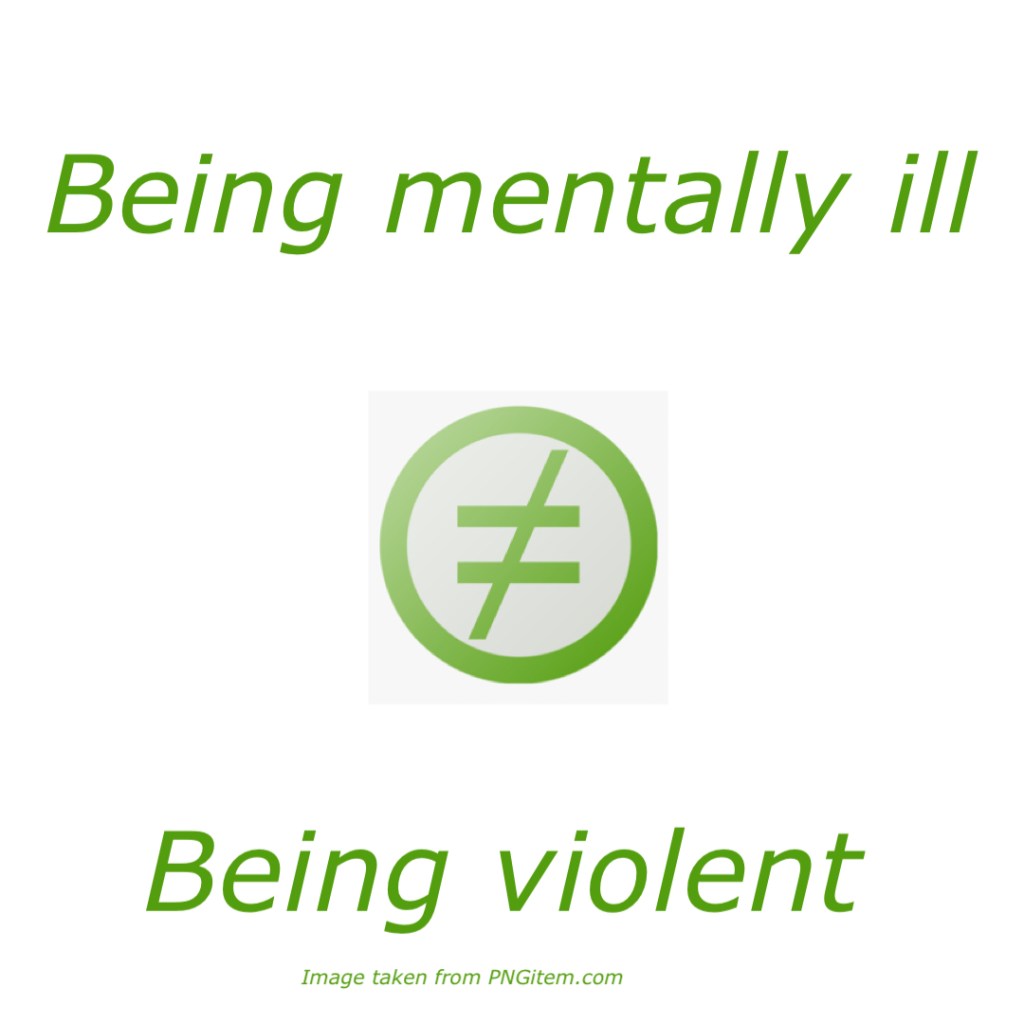
The truth is that mental illness and a borderline personality diagnosis does not equal abusive or vice versa. If a person does happen to have BPD or any other mental illness and is also abusive, their mental illness is not an excuse for abusive behavior. An abusive person is just that: an abusive person. Also, a person with BPD is not a hopeless case. There is a particular type of therapy treatment just for people with the disorder called Dialectal Behavioral Therapy. With treatment and support, a person with BPD can develop the skills they need to live productive lives. 

All in all, one big take away from my research on borderline personality disorder is that views on mental illness are still pretty warped. We’re much more open to discussing mental illness now, however, there is still a lot of misconceptions and stigma around. 

I’ll wear it with Pride

“It looks like someone tried to chop your head off”, my father joked.

He was referring to the new scar on my neck. I’ve mentioned before in my blog that I have a a genetic disorder called Turner Syndrome. This condition can lead to a lot of complications, and one of those complications include issues with the thyroid gland. Blood tests were showing issues with my thyroid for a while. My doctor first decided to monitor the condition, but blood tests started to show that it was slowly getting worse and worse over time. She eventually suggested surgery. 

For those who are familiar with surgery procedures, I’m sure you already know that a lot of doctor appointments are involved to prepare a patient for surgery. Not only did I have an appointment to meet with the surgeon, I had a lot of appointments to make sure I was in good shape for surgery to begin with. It was definitely a stressful time, but I was just happy that my thyroid issue was being dealt with. I was so relieved, in fact, that there was no room in my mind to really think about the scar the surgery will leave.

After the surgery, my next priority was making sure I was getting rest in order to get better. Plus, there were bandages covering up the surgical scar. It wasn’t until about two weeks after the surgery when my doctor removed the bandage and stitches, but I didn’t see the scar until I reached home. 

“Awww. Now you’re gonna have a scar.”, one of my siblings said.

The healing process proved my sibling right of course. The surgical incision has healed pretty well, but it definitely left a scar. It also managed to form into a small, lumpy keloid that disturbs the otherwise smooth skin on my neck. However, my sibling’s lamentation over my scar is not what stuck with me during the healing process but her words right after:

“But I guess as people age and go through life signs of what they’ve been through start to show”.

Sometimes, what we’ve been through in life definitely does leave scars, whether physical or mental, and these scars tell our story. They are a reminder that we’ve been through some rough times, but we get through them, and that means we can weather through anything else that comes our way as well. This is how I’ve come to see my surgical scar. I thought I’d share this to give an idea of what’s been going on with me lately, and why I’ve been gone for a while. I also wanted to encourage anyone dealing with a rough situation right now that you will get through it even if it leaves a scar. Hope this post did the job, and I’ll see you in the next one! 

Mental Health 3: The Journey Continues

I always knew I was different from my peers when I was a child. What I did not know was why. A blood test taken during my teen years eventually showed that I have a genetic disorder, and that answered a lot of questions for me. I finally knew the answer to why. Receiving a diagnosis of a mental illness is no different. 

I have been seeing a counselor for a little over a year now. My biggest issue when I started going to therapy was depression, and that was the focus of my sessions. However, as time went on, I started talking with my therapist about other issues outside of my depression as well. Around March this year, my therapist added borderline personality disorder to my major depressive disorder diagnosis. 

The American National Alliance on Mental Illness (NAMI) describes the disorder as thus:

“Borderline Personality Disorder (BPD) is a condition characterized by difficulties regulating emotion. This means that people who experience BPD feel emotions intensely and for extended periods of time, and it is harder for them to return to a stable baseline after an emotionally triggering event.

This difficulty can lead to impulsivity, poor self-image, stormy relationships and intense emotional responses to stressors. Struggling with self-regulation can also result in dangerous behaviors such as self-harm (e.g. cutting)”. 

People with BPD can be extremely sensitive, and HelpGuide describes having the condition to “having an exposed nerve ending. Small things can trigger intense reactions”. 

After doing a bit of research on BPD, I felt my new diagnosis was accurate and described me in a way. After diagnosing me with BPD, my therapist changed my therapy sessions slightly. Research shows that Dialectical behavior therapy (DBT) is the most effective therapy treatment for patients with BPD. In fact, DBT was created to treat patients with Borderline Personality Disorder. DBT helps patients with borderline personality disorder regulate their emotions “… – it encourages them to solve their problems. It focuses on skills training to equip clients with tools to effectively cope with their issues. DBT also helps them create long-term goals and work towards it”. My therapist started incorporating some DBT techniques into my therapy sessions, and they have definitely been a helpful new addition to the skills I have already been learning. I feel like a puzzle piece that has been missing a long time has finally been found, and now I have all the pieces I need to reach a place of mental stability soon. 

Life is a journey, and we never really stop learning. My BPD diagnosis is helping on my journey of self discovery the same way my genetic disorder diagnosis did. Answering the “why” questions (why I am I having these problems I’m facing), leads to answers for the “how” questions (I know why I’m having these problems. Now how can I fix them). Now the road to recovery can really begin.

Until next time,

Charli ❤️

Design a site like this with WordPress.com
Get started