Hello all! Welcome back to my blog! I have talked a lot about being a person with a disability here on my blog.
I was born with my disability, but many people with a disability were not. The disability group is unique in that it is one minority group where people become part of it at any time. Accidents can happen, or illness can lead to disability. Also, as a person gets older, there is a large chance of them becoming disabled. Of all people with a disability, half are age 65 or older in my country of the United States. Overall, approximately 1 in 4 adults are living with some type of disability in the United States.
Unfortunately, some people have a disability that is debilitating enough to keep them from working. Fortunately, there is financial support available for such people. One program set by the United States government is Social Security Disability Insurance or SSDI. With SSDI you can receive financial support monthly. If you are dealing with a disability, you can get help to find out if you are eligible for SSDI and even how much money you might get each month from Disability advocacy group Disability Advice. A post with an SSDI calculator and details about SSDI benefits can be found on their website.
The post was written by Linda Cosme, JD. She has extensive experience as a lawyer and advocate for people with disability. She is currently Vice President of Disability Policy and Strategy at an advocate organization called Citizens Disability. Independent Legal Consultant for those seeking SSDI, appeals officer for the Social Security Administration, and Case Adjudication Specialist for Disability Determination Services were some of her other roles.
Checkout Disability Advice’s website and find out more about SSDI and if you should apply. Click here.
I have been talking a lot about my experience with disability and the issues those with disabilities face. I have mostly talked about learning disability and invisible disabilities. This time, I am touching a little on physical disabilities, particularly limb loss or amputation.
I have personally known people who had to have parts of their limbs amputated because of diabetes. I myself am prediabetic. Diabetes is a leading cause of amputation. Around 160,000 amputations are performed each year due diabetes in the my country of the United States. Approximately 185,000 amputations over all are done. Nearly 2 million people in the United States are living with limb loss.
I was recently contacted by a company to share a guide on living with limb loss or amputation. Adjusting to limb loss is not easy. My blog is all about spreading awareness on the experience of living with a disability, so I decided to accept the company’s collaboration offer. Their guide focuses on helping people with amputations adjust to driving with limb loss. Amputation and limb loss does not have to mean the loss of independence.
The company I’m collaborating with is a law firm called RichmondVona that focuses on injury cases. The law firm is located in New York in the United States. The company was founded by lawyers John E. Richmond and Keith R. Vona, who have over 20 years of experience. They have helped their clients win over $200 million. RichondVona prides itself on valuing each individual client like a part of a family.
Our family understood what supporting a kid with a disability feels like because I came into the world that way and it wasn’t easy.
Born breach the doctor thought it was my bottom, but it was my shoulders and he crushed them with the forceps.
Support Children with Disabilities and Tips for Parents and Teachers
I not only was in the hospital for over 3 months, but my parents took me to PT 4 days a week till I was 7 when they transplanted muscle out of my shoulder to my lower arm.
So I understand, but some kids don’t understand and can just be curious. Heck I’ve had adults ask me what’s wrong with my arm, therefore in the hospital for over 3 months, but my parents took me to PT 4 days a week till I was 7 when they transplanted muscle out of my shoulder to my lower arm.
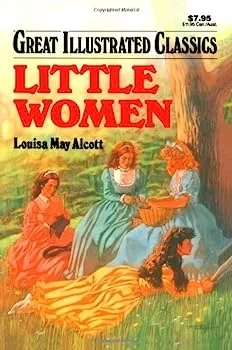
Interested in reading so My mom bought me a book 📖 called, “ LITTLE WOMEN .” I was hooked. To this day, over 65 years later it’s still my favorite book. As an adult I now collect any edition of “ Little Women” and my library has grown.
In this blog post, we will explore some practical tips and helpful resources that parents and teachers can use but before that I wonder if you know how many disabilities kids deal with!
Cerebral palsy ,Learning disability, Attention deficit hyperactivity disorder, Autism spectrum disorder, Hearing loss< Deafblindness< Down syndrome, Spina bifida, and so many more.
Have you ever heard of Angelman Syndrome ?
Angelman Syndrome is a disorder that is caused by the loss of function of a specific gene. This gene is located on the chromosome 15, and it is responsible for providing instructions for making a protein called UBE3A. This protein is essential for normal brain development.
Angelman Syndrome results in characteristic features, such as severe intellectual disability, developmental delays, speech impairment, and problems with movement and balance.
In addition to these physical symptoms, people with Angelman Syndrome often have a happy demeanor and frequently laugh and smile. They may also be attracted to water and have a fascination with lights and movement.
While there is no cure for Angelman Syndrome, early intervention and support can help improve the quality of life for affected individuals and their families.
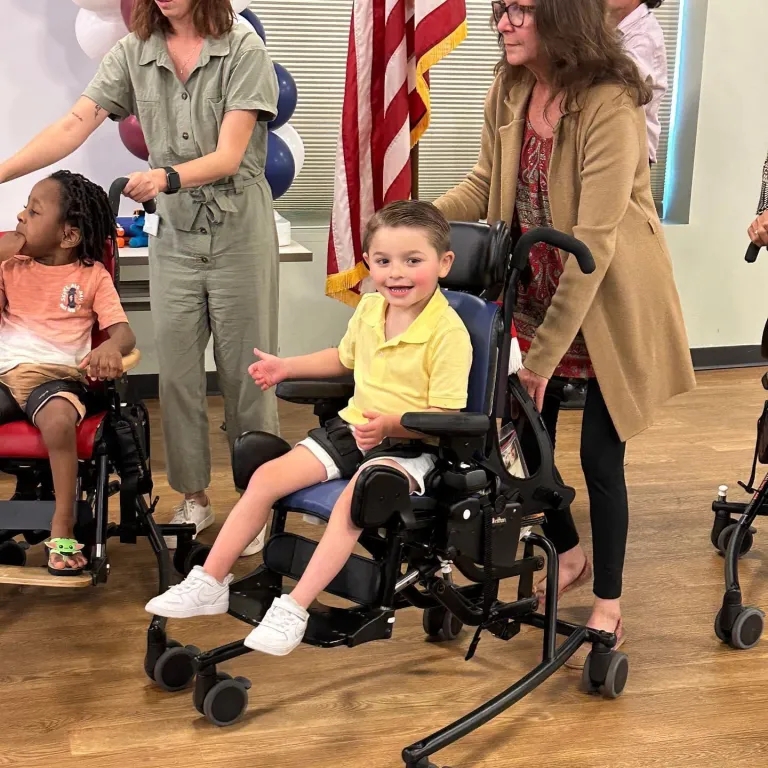
I have a friend whose second child has Angelman Syndrome. They have the most loving family, 3 beautiful children, Colti is their middle child who has this syndrome. They are amazing!
Below are several excerpts from her posts on Facebook.
With her permission I’d like to share with you.
“ In our house we read books about Chromosomes. We talk about our bodies & our brains, how they came to be, how different everyone is, & all of the reasons that those differences are wonderful.
Realistically, we have children’s books about chromosomes because we have a child/sibling that is missing a piece of one of them.
Having a son/brother with Angelman Syndrome has opened our eyes to the big world of children with special needs & just how common it actually is! There is a whoooole lotta “Rare” out there!
Wanting her children to know that different is not scary they bought a book about chromosomes.It’s not weird, or stupid, or messed up, or crazy.
Our brains simply work differently. These are our genes & as long as everyone’s doing the best they can, it is good enough & they are valuable.”
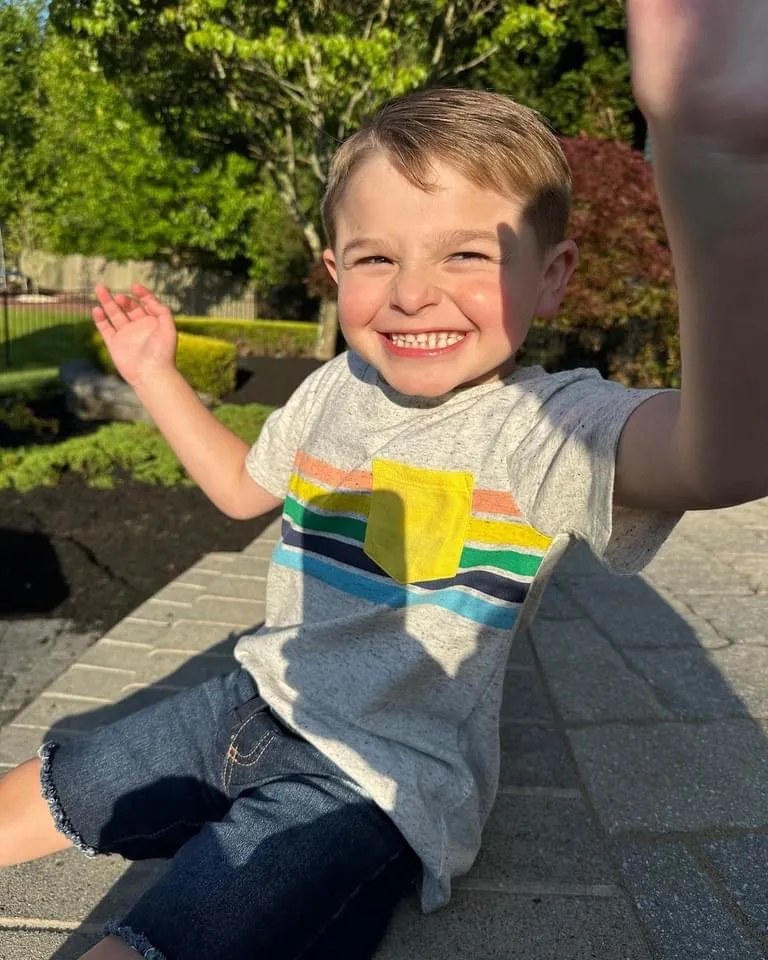
Colti is the cutest little boy and smiles all the time!
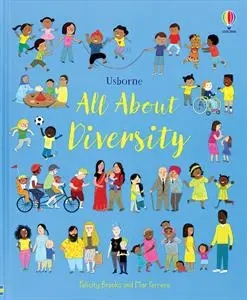
This dynamic and joyous exploration of difference helps young children learn to respond in a kind and equal way to everyone ,
regardless of shape, size, age, physical and mental ability, gender, race, beliefs, language, culture, national identity, background, and so on.
With topics ranging from clothes, hair, music, and food to homes, festivals, and families, there is plenty for children to talk about as they find out about diversity and see how differences relate to them.
Having a different brain is as normal as having a different face. We’re all made a little different & a little the same.
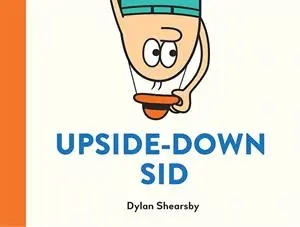
This is a really cute book:
Sid spends most of his time at home. He is upside down, so it’s easier that way. Until, one day, a basketball lands in his breakfast and changes everything.
A book about accepting our differences and the positive ripple effect of including others.
Education is the key to inclusion for all that are considered rare! Whether your born rare or became rare.
So, please! Educate your babies, so babies like mine don’t need to battle anything more than what the universe has handed them.
Another condition is having Bicuspid aortic valve (BAV) is a congenital heart defect that affects the aortic valve, which is responsible for regulating blood flow from the heart to the rest of the body.
BAV occurs when the aortic valve only has two cusps instead of the normal three, which can cause blood to leak backward into the heart.
While some people with BAV live without any symptoms, others may experience a range of heart problems that require careful monitoring and treatment. If you’re a parent or teacher of a child with BAV, here’s what you need to know.
Bicuspid aortic valve is a serious heart condition that requires careful monitoring and management, but with the right treatment and lifestyle choices, many children with BAV can live healthy, fulfilling lives.
As a parent or teacher, it’s important to be informed about the causes, symptoms, diagnosis, and treatment options for BAV,
and to provide support and encouragement to children with this condition as they navigate the challenges of growing up with a heart condition.
With the right care and support, children with BAV can thrive and reach their full potential.
His parents do a yearly fundraiser called
TEAM SUPER COOPER
“ Cooper McGee was born on 2/12/21, he was diagnosed at 6 weeks old with a CHD. After a murmur was heard in the doctors office we went and had an echo at Chop Cardiology.
It was then that Cooper was diagnosed with a bicuspid aortic valve with a moderate stenosis. Cooper is seen by cardiology every 4 months since birth, his stenosis numbers have stayed the same, therefore requiring no cardiac intervention at this point.
He will eventually need undergo a cardiac cath and open heart surgery (we hope that is far down the road). “
“ Our Super Cooper is full of energy and lives everyday to the fullest. You can always count on Cooper to make you smile or give you a hug.
This event is important for us as we walk for Cooper, our heart warrior, in hopes that the funds raised will help in future research to make sure he and all other CHD warriors, gets the best care an outcomes in their care.
“ We participate in the Congenital Heart Walk to support the mission of The Children’s Heart Foundation: to advance the diagnosis, treatment, and prevention of congenital heart defects by funding the most promising research.
As you can see his brother adores little Cooper!”
As you can see this isn’t a physical disability because you don’t look at Cooper and know he has disability!
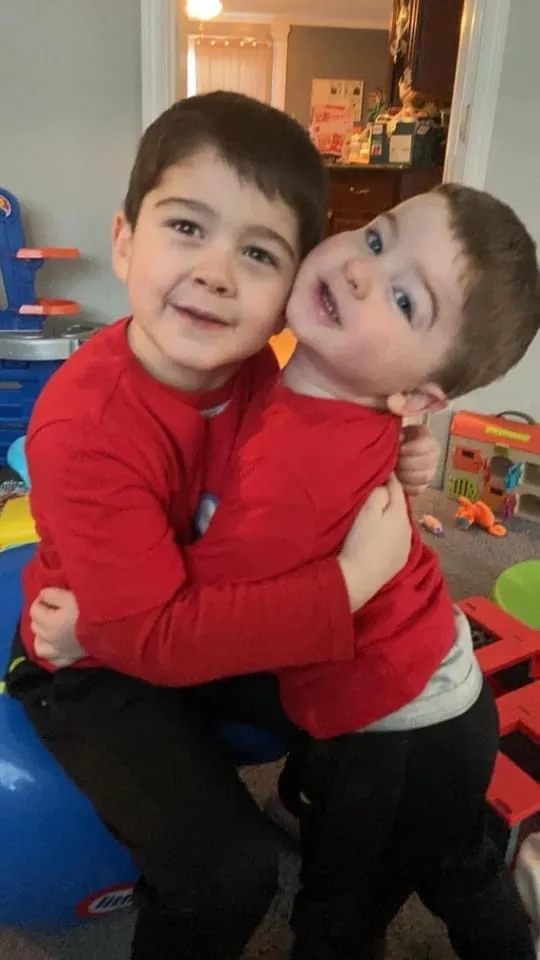
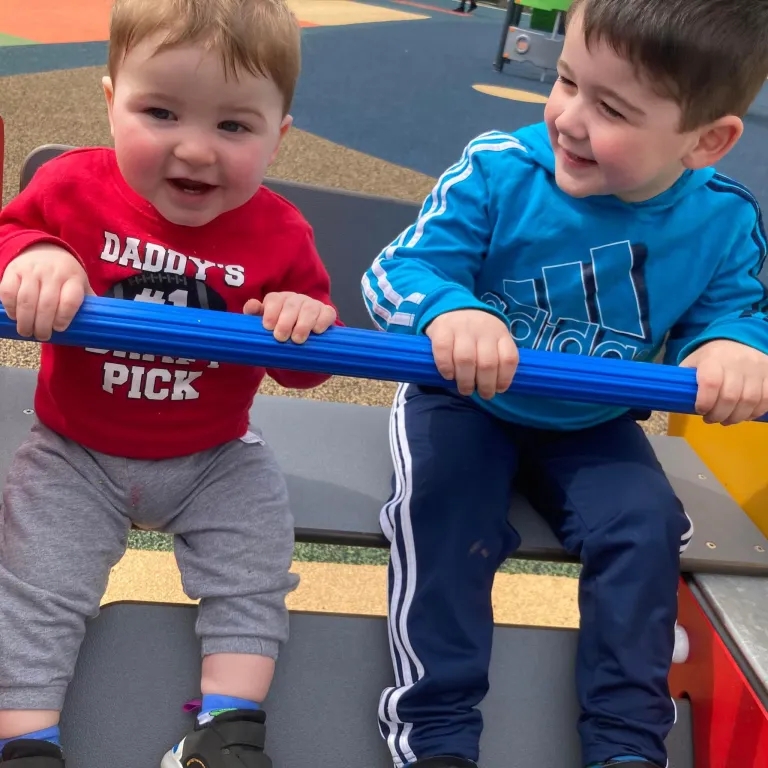
Just look at the way big brother Jack’s looking at Cooper !!!
Education Awareness
The first step in supporting children with disabilities is to educate yourself on the specific disability that the child is facing.
There are many types of disabilities, each with unique challenges and strengths. Understanding the specific diagnosis can help you better understand how to approach and support the child and their family.
Resources like the National Center for Learning Disabilities and the National Institute of Mental Health have comprehensive information on different types of disabilities. https://www.ncld.org/
Create an Inclusive Environment:
One of the most important things that parents and educators can do is to create an inclusive environment that welcomes children with disabilities.
This includes providing physical accommodations like wheelchair ramps and Braille signage, as well as social accommodations like allowing extra time for assignments or providing a quiet space for children who are easily overwhelmed.
Inclusive classrooms and social situations help children with disabilities feel accepted and valued, which can help them thrive both academically and socially.
And most classrooms have an abundance of books to read to kids and some will let parents borrow them.
Promote Self-Advocacy:
Children with disabilities can benefit from learning how to self-advocate for their own needs and accommodations.
Parents and educators can empower children with disabilities by teaching them to ask for help when they need it, to articulate their needs and preferences, and to advocate for themselves in social situations.
Self-advocacy helps children with disabilities build confidence and become more independent.
Offer Emotional Support:
Children with disabilities may face additional emotional and social challenges that can be difficult to manage.
Parents and educators can offer emotional support by actively listening to the child, providing emotional validation, and connecting the child with resources like supportive counseling or peer support groups.
Emotional support can help children with disabilities cope with the unique challenges they face and develop resilience.
Partner with Parents and Caregivers:
Parents and caregivers are essential partners in supporting children with disabilities.
Regular communication and collaboration between parents, caregivers, and educators can help ensure that the child’s needs are being met and that everyone is working towards the same goals.
Working together can also build trust and strengthen relationships between parents and educators, enhancing the child’s experience and outcomes.
Supporting children with disabilities is an ongoing process that requires ongoing effort, communication, and collaboration.
By educating ourselves, creating inclusive environments, promoting self-advocacy, offering emotional support, and partnering with parents and caregivers, we can make a significant difference in the lives of children with disabilities.
With patience, compassion, and persistence, we can help children with disabilities thrive and reach their full potential.
Buy those books above to start educating your child to various disabilities!
Also check out the above post on why it’s so important to read to your kids!
Buy those books above to start educating your child to various disabilities!
About the Author
My name’s Antoinette [aka Tonie] Tardive Bryant. I’ve been married 43 years and still so in love, 3 adult kids, 2 gorgeous “ daughter in loves” as I refer to them, 2 adorable grandchildren, and my dog, Mokie.
In 2020 I joined PaperPie because I think that reading is important for children to grow and develop. Originally to make some xtra money and get my grandchildren free books, and it took off.As part of PaperPie we do book drives and fundraisers. I am trying to do my part and give back to the community and charities.
So I’ve recently been denied a service for people with disabilities. This wouldn’t be the first time, but that doesn’t make this situation any less frustrating. I’ve mentioned on my blog before that I am a person with a disability. The problem is that my disability is very unclear. I have an invisible disability, and often others can’t understand what exactly is wrong with me. My physical and intellectual abilities seem to be very much intact. What could I possibly need with disability services, right? Sometimes I even question whether or not I am a person with a disability myself because of all the doubt around me. However, while people are deciding whether or not I am actually a person with a disability, my struggles are very much real, and I deal with them everyday.
I’ve talked about the condition that I have on my blog many times. I have a genetic disorder called Turner syndrome, and it’s the reason for my struggles. Having Turner syndrome does not automatically make a person disabled, however, it can lead to disability. Tuner syndrome can lead to many complications. One of those complications is learning disability. Unfortunately, this fact is not very well known, because Turner syndrome is not well known. Also, girls with Turner syndrome can lead normal lives with proper treatment. However, every girl with Turner syndrome’s experience is different, and some do struggle more than others.
Another issue is the type of disability that girls with Turner syndrome sometimes have. Turner syndrome can lead to nonverbal learning disability. This means they can have issues with visual-spatial skills. Unfortunately, nonverbal learning disability is still not recognized as an official disorder.
All of these combined issues make it hard for me to get the services I need. People simply don’t understand my struggles, and don’t understand why I need help. What is really needed is more awareness on both Turner syndrome and nonverbal learning disability. What is also very needed is an understanding that every person’s experience is different. Not every person with a disability has a disability that is obvious.
I just found out that today is Disability Day of Mourning. It is a day to remember people with disability who were killed by their caregivers. Unfortunately, children don’t get to choose the parents they are born to. I am very fortunate that I was born to parents who love me and for fought me and my rights all throughout my childhood, and still fight for me.
My unique struggles are invisible, so fighting for me to get the support I need hasn’t been easy on my parents, but they have been by my side anyway. They have never once made feel like a burden. To all my beautiful friends with disability out there, you are beautiful. You are not a burden. To all my friends out there who are the loving caregivers of someone with a disability, you are beautiful and appreciated.
Welcome to my first blog post of the year! The topic of this post is one that has been on my mind for some time. I have shared my experience as a person with a disability on my blog before, but I have had yet to go in to detail about what my disability is. Issues that people with disabilities face is one topic that I am passionate about, and one of the reasons I started this blog. I want to raise awareness on the issues we face. In this post, I want to discuss learning disability, and raise awareness on a little known type learning disability called nonverbal learning disability.
If I were to tell a friend that I caught a cold, they would know exactly what I am going through. Chances are that I am dealing with a cough, a sneeze, and a runny nose. A name and a diagnosis leads to understanding. That type of understanding was what I craved for growing up, and what i’m still looking for in my adulthood years. I came close to that when I was diagnosed with Turner syndrome in my early teen years, and when I was officially diagnosed with learning disability in early adulthood. However, it’s not enough.
In previous posts, I have mentioned that I’ve recognized how different I am from my peers from the time I was a very small child. My Turner syndrome diagnosis answered a lot of questions for me, especially when I started to do a little research on the condition. I found that girls with Turner syndrome often have learning difficulties, and when I was diagnosed with learning disability, I was relieved to finally have a name for what I was experiencing. However, the diagnosis was Learning Disability NOS, NOS meaning not otherwise specified. Learning disability is a catch all term for a group of neurologically-based processing conditions. According to Learning Disabilities Association of America
As already mentioned, learning disability is a general catch all term. “Not Otherwise Specified” is also a general term, and is often used to give a general, nonspecific diagnosis. When someone is given a diagnosis of learning disability NOS, it means the psychologist doing the testing recognizes the patient has learning difficulties, but can not pinpoint what his or her specific learning disability might be. As happy as I was to have a diagnosis, I still wished I could have gotten a diagnosis that was a little more specific and provided more answers. However, I understand why I was given the general diagnosis. Out of all the learning disabilities that I mentioned before, the only one that is not considered an official condition is nonverbal learning disability.
Do I have nonverbal learning disability? Would be I diagnosed with the condition if it was recognized as an official condition? I’m not entirely sure. All I know is that I do have many of the symptoms recognized as symptoms of people with NLD. If It were to be made an official condition, then maybe there would be more answers. More answers means learning more about oneself, and learning how to handle struggles due to disability, and learning how to advocate for yourself, starts there.
Hello everyone! I am so excited to be collaborating with fellow blogger Amanda Gene! Amanda’s blog is a personal blog that covers her life experiences, particularly her experiences as a person with a disability. She also uses her platform to let other people with disabilities share their experiences too! I have mentioned on my blog and social media many times that I am a person with a disability, and Amanda asked me to do an interview for her blog to share my experience! I am so honored! You can click here to read the interview! Amanda’s blog and story is so inspiring, so be sure to checkout Amanda’s other blog posts as well! Thankyou for visiting and supporting my blog! Once again, happy holidays, and I will see you in the next post!
This week is Teacher Appreciation Week. I had many wonderful teachers who had a huge role in shaping who I am today. However, if I had to pick one teacher who made the biggest impact in my life, I would have to pick my first grade teacher. Let’s call her Miss. Z.
When I was a child I had a terrible attention span. That’s the case for most children, but my attention span was short even for a child. I was easily distracted by anything. Instead of listening to my teacher, I would play with whatever might be in my hands, or I would turn my attention to what’s going on outside if I happened to be near a window. Sometimes it would be so bad that I would be daydreaming the whole class time and forget to write down the homework. My mother would get furious whenever that happened! Both my parents and teacher started to worry about me. Miss. Z started working on ways to help me, such as giving me extra attention. She also collaborated with my parents. For instance, she would have my parents sit in class with me. My parents also tried to do their part by helping me at home. Miss. Z suggested timing me while I did my homework, which is exactly what my parents did. Miss. Z recognized that I needed a lot of help, but she didn’t lower her expectations for me. She didn’t ignore my struggles, and believed that with help I could be just as successful as my peers.
All of the intervention helped. My attention span is still not great, but it has improved tremendously since elementary school. I am very grateful for Miss. Z. Here in the U.S., a teacher’s job is not easy, especially if the teacher is working in a public school. Many classrooms in public schools have classes with around 30 students. It is not easy to pay attention to that many children. Also, the work load can be very heavy. On top of planning lessons the teacher has to grade the classroom assignments, homework assignments, projects, and tests of around 30 students. The teaching profession also doesn’t receive as much respect as some other professions. These are some of the few reasons many teachers here in America often leave the profession behind after a short while. In fact, statistics show that around 50 percent of new teachers leave the profession within their first five years, and around 52 percent of current American public school teachers have 10 or less years of teaching experience.
However, teaching is a very significant profession. Pretty much every other profession starts with a teacher. Whatever profession a person is in he or she needed to learn how to do his or her job, and the person who taught him or her was a teacher. Also, a teacher’s job is not just to teach. In the case of children, the teacher is like a second parent, and spends the most time with his or her students outside of the parents. It is the teacher’s job to pay close attention to the students and notice anything out of the ordinary. A child may be going through abuse at home, or might have a disability (the latter was the case for me), and it is part of a teacher’s job to catch these possibilities. If a child is struggling at home or is struggling with a disability, the child will also struggle to learn.
Despite all the hardships that come along with the teaching profession, my teacher Miss. Z still managed to notice my struggles, and give me the attention I needed to overcome them. I appreciate her and teachers like her who genuinely care about their students and take their jobs seriously. To all teachers here in the U.S. and around the world, Happy Teacher’s Appreciation Week!
“We hire Shaun and we give hope to…people with limitations that those limitations are not what they think they are, that they do have a shot!”
Dr. Aaron Glassman The Good Doctor Episode 1 Season 1
I’m a little late to joining the bandwagon as the show is already in its second season, but I started watching a show called The Good Doctor. For those who don’t know, the show is about a man named Shaun Murphy who is a surgeon. He also happens to be a man with autism. I’ve been really enjoying the show so far, and was inspired to tell me story about my own experiences as a person with a disability.
There is one word to covers the two reactions people with disabilities generally receive: doubt. There is either doubt in the person’s capabilities, or there is doubt that the person has a disability at all. In the show The Good Doctor, Shaun Murphy fits into the first category. His memory, visual spatial skills, and analytical skills are far above average. He is an asset to the hospital he is working in. However, many of his coworkers can’t see past his very apparent disability. I, on the other hand, fit into the latter category. My disability is invisible, and I often find myself having to prove that I actually am a person with a disability.
From the time I was a small girl, it was apparent to everyone in my inner circle that I was a little different from my peers. Spend enough time me, and one would definitely be able to see my deficits, but only if that person is paying close attention.
“You don’t seem like a person with a disability to me”, a friend once told me.
Little did she know that it’s that same sentiment that often makes it difficult for me to get the help I need. The specific kind of disability I have is learning disability. There are different kinds of learning disabilities, and most of them are language based. That means people with those types of learning disabilities have trouble with spoken or written communication. The most well known language based learning disability is dyslexia. Communication is not a problem for me though. In fact, I’ve been told that I express myself very well, especially through writing.
For me, the problem lies in processing. Many activities that might take other people minutes to complete can take hours for me, however, this would not be easy to notice through mere minutes of conversation with me.
“I wish I had your brain.”, a classmate from college once told me. She did not understand that it was not a superior intellect that made me successful during my time in college. It was my work ethic and perseverance that made me successful. Like any other person, I work extremely hard for what I want, and in some cases I have to put in even more effort than the average person.
For Shaun Murphy from The Good Doctor, his disability is front and center for those who meet him, and masks his capabilities. They don’t take the time to understand him and realize that his disability is only one part of who he is. That is a reality for many people with disability. In my case, people don’t take the time to understand that some disabilities are invisible, and you never know what someone might be going through. My take away from the show The Good Doctor and my experiences is that we might all have our different stories to tell, but there is one thing that connects us: the desire to be understood.





 Life with Charli